
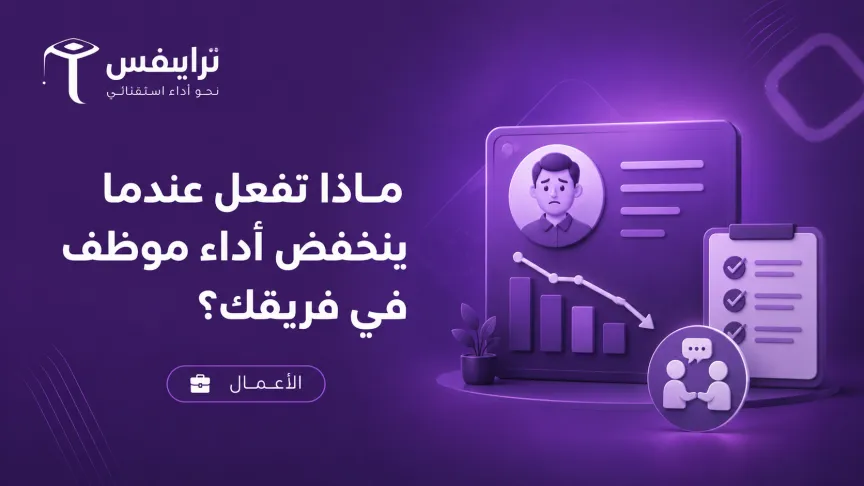
What to Do When an Employee’s Performance Starts to Decline
Declining performance does not automatically mean an employee is disengaged or unsuitable for the role. Before reaching a conclusion, identify the performance gap, review expectations, skills, resources, and priorities, then agree on a clear improvement and follow-up plan.
Short answer
What Should You Do When an Employee’s Performance Declines?
A previously strong employee begins missing deadlines, making more errors, and participating less. It is easy to conclude that they no longer care. But performance decline can have many causes.
Start with Observable Facts
Replace labels such as “lazy” or “unreliable” with specific data about delayed tasks, errors, or missed standards.
Define the Performance Gap
Identify the difference between what is expected and what is actually happening.
Are Expectations Clear?
Confirm that the employee understands the standards, deadlines, priorities, and how success is measured.
Can the Employee Perform the Task?
Distinguish between “does not want to” and “cannot do it yet.” A skill or knowledge gap may require training, coaching, shadowing, reference materials, or practice.
Do They Have the Necessary Resources?
Review tools, systems, time, workload, authority, information, and dependencies on other teams.
Are Priorities Conflicting?
Ask the employee to identify their top priorities and compare them with yours. Misalignment can create performance problems.
Talk Before You Assume
Begin with what you observed and ask what has changed. Data and conversation should work together.
Give Feedback About Behavior and Impact
Focus on the situation, result, impact, expectation, and next step rather than attacking the person’s identity.
Agree on a Clear Plan
Define what needs to change, by when, how it will be measured, what support is available, and when progress will be reviewed.
Do Not Turn an Improvement Plan into Punishment
If the objective is improvement, the plan should include clear expectations, support, a reasonable opportunity to improve, follow-up, and appropriate documentation. Formal processes should follow policy and applicable law.
Follow Up
Review progress regularly rather than waiting until the end of the improvement period.
Recognize Improvement
Specific positive feedback helps employees know what behavior or process should continue.
What If Performance Does Not Improve?
If expectations, capability, tools, support, and follow-up are all in place and performance remains below the required standard, the organization may need to move to formal procedures consistent with policy and employment law.
Let the Employee Help Build the Plan
Ask what solution they suggest, what support they need, and what they will do differently.
Use a Quick Diagnostic Framework
Review expectation clarity, capability, resources, opportunity, priority, feedback, motivation, and system barriers. This is an organizational tool, not a medical or psychological diagnosis.
Performance Management Is Ongoing
If the annual review is the first time an employee hears about a performance issue, the follow-up system itself may need improvement.
Separate Performance from Identity
“This result did not meet the standard” is more useful than “You are a bad employee.”
From Problem to Solution
You can explore Mastering Employee Performance Management – on TRAIVIS:
https://traivis.com/ar/courses/mastering-employee-performance-management-atkan-adar-aladaaa-alothyfy
Structured learning can help managers understand expectations, measurement, feedback, development, and follow-up. Formal employment decisions still depend on organizational policy and applicable employment law.
Your Next Step
When performance declines, begin with “What exactly is the performance gap?” Then review clarity, capability, resources, priorities, and the employee’s explanation before choosing a response.
Read Also:
Why Is an Annual Employee Performance Review Not Enough?
How Do You Give Effective Feedback to an Employee?
How Do You Set Clear Performance Goals for Your Team?
About the Author
The course is taught by Dr. Ali Kamel Hammoud, a certified executive trainer and business consultant with over 20 years of leadership and consulting experience across Kuwait, the GCC, Jordan, and Egypt. He has led teams of up to 2,000 employees. He holds a Doctorate in Business Administration (DBA) and an MBA from Kuwait University.
To keep building your management skills, Dr. Ali Hammoud also teaches Accounting & Finance Basics for Non-Financials and The Complete Time Management Diploma on Traivis.