
What Is an Offshore Company? 7 Misconceptions You Should Understand
Forming a company outside your home country does not automatically mean zero taxes, hidden ownership, or easy banking. Understanding an international structure starts by separating where the company is incorporated from where it is managed, operates, and where its owners reside.
Short answer
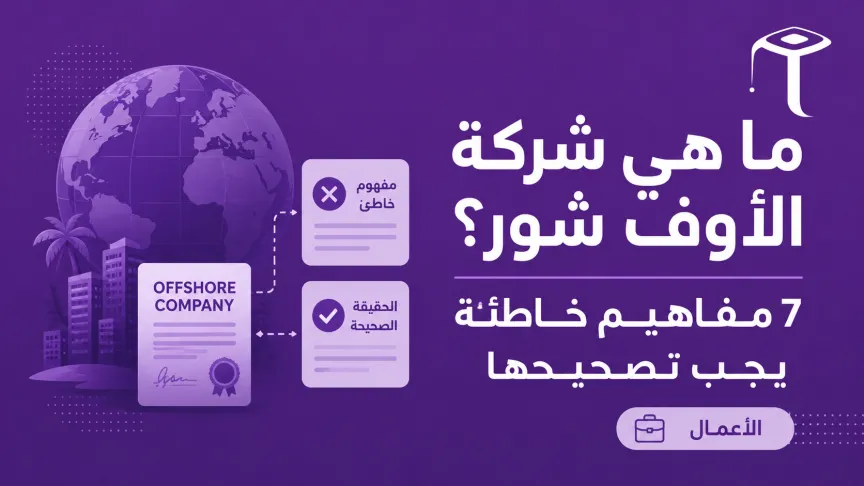
What Is an Offshore Company? 7 Common Misconceptions to Correct
The term “offshore company” often creates images of zero taxes, secret bank accounts, hidden owners, and no obligations after incorporation. In reality, the term covers many different legal, tax, and compliance situations.
Misconception 1: Offshore Companies Are Illegal
Forming a company in another jurisdiction is not inherently illegal. International entities can be used for trade, investment, asset ownership, regional operations, or expansion. The structure must comply with the laws applying to the company, its owners, and its activity.
Misconception 2: Offshore Means Zero Tax
A low-tax jurisdiction does not automatically remove all tax obligations. Tax may depend on management location, business activity, income source, owner residence, permanent establishment, distributions, and other rules.
Misconception 3: Nobody Will Know the Owner
Public visibility and legal disclosure are different. Beneficial ownership, KYC, AML, and source-of-funds requirements may mean banks, authorities, and service providers know who ultimately owns or controls the company.
Misconception 4: Banks Will Not Ask Many Questions
International companies may face detailed banking checks. A bank may request business plans, contracts, invoices, customer and supplier information, source of funds, owner experience, and management-location information. Incorporation does not guarantee banking approval.
Misconception 5: Information Does Not Move Between Countries
Reporting and information-exchange rules differ, but a structure should not be based on the assumption that information can never reach legally entitled authorities.
Misconception 6: There Are No Duties After Incorporation
Ongoing requirements may include renewals, accounts, reports, filings, records, beneficial-owner updates, licenses, registered office services, and banking compliance.
Misconception 7: A Popular Jurisdiction Fits Everyone
A popular offshore jurisdiction may not suit your activity, customers, management location, owner tax residence, banking needs, investors, or licensing requirements.
Separate Four Locations
Distinguish where the company is incorporated, where it is actually managed, where the business and customers are, and where the owner is tax resident.
Offshore Is Not One Entity Type
The company may be an LLC, corporation, IBC in some jurisdictions, or another structure. Ask about the actual legal entity, liability, reporting, restrictions, and permitted activities.
Commercial Reputation Matters
A legally valid structure can still create practical problems if banks, customers, or investors have restrictive policies toward the jurisdiction or entity type.
Privacy Is Not Absolute Secrecy
Some jurisdictions may offer public privacy, but that is different from promising that no authority or financial institution can identify the owner.
When Can International Formation Make Sense?
It may be useful when connected to genuine business needs such as market entry, international customers, investment structures, regional operations, or payment requirements.
From Problem to Solution
You can explore on TRAIVIS:
Instructor: Abubakr Eldin.
Educational content can help build an introductory understanding of international company structures, but it does not replace jurisdiction-specific legal or tax advice.
Your Next Step
Do not begin with “Which country has the lowest tax?” Start with why you need the entity, where it will be managed, where the customers are, where you live, and how banking will be used.
Read Also:
Forming a Company Abroad: How Do You Choose the Right Country?
What Questions Should You Ask Before Forming an International Company?
How Do You Choose a Bank or Payment Provider for Your Business?
About the Author
Lawyer Abu Bakr Al-Din—a trainer and partner at LexPath (Abu Bakr & Al-Sini Advocates) Author of the "Legal Knowledge and Legal Literacy" series Host of the *Mizan* and *Fi Falak Al-Qanoon* (In the Orbit of Law) podcasts.