
How to Build a Learning Community Around Your Course in 2026
Research consistently shows that students who participate in a learning community are two to three times more likely to complete their course than isolated learners. They ask more questions, retain more information, and build professional networks that extend the value of the course far beyond its content. This guide shows you how to build and sustain that community.
Short answer
Why Community Matters More Than Ever in 2026
The online education market is saturated with content. A student searching for virtually any topic can find dozens of courses at every price point. Content quality, while necessary, is no longer a sufficient differentiator. What separates the courses that build lasting businesses from those that compete on price alone is the experience surrounding the content — and community is the most powerful component of that experience.
AI tools have made content creation faster and easier, which means the supply of courses will only increase. But AI cannot replicate the human connection, peer accountability, and shared motivation that a real learning community provides. Community is your moat — the thing competitors cannot easily copy.
The Three Pillars of a Thriving Learning Community
Pillar 1: A Gathering Place
Every community needs a home — a single place where members can connect, ask questions, share progress, and interact with the instructor. This should be built into the course experience, not bolted on through external tools that fragment the student journey.
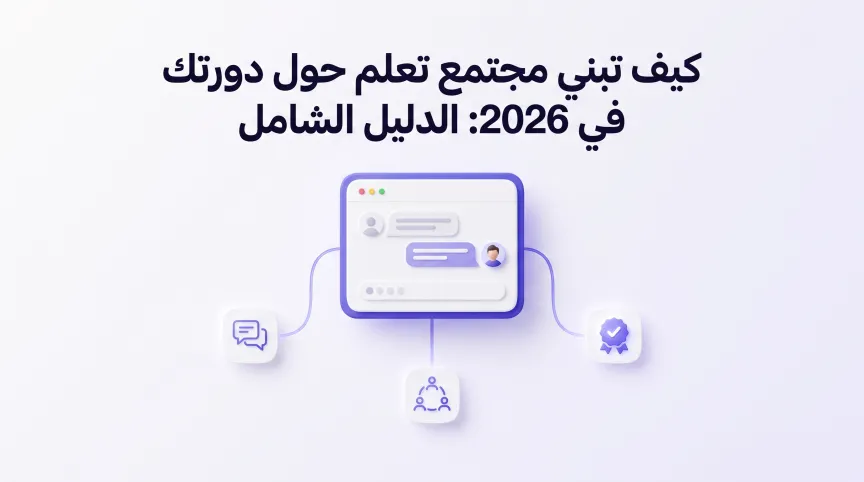
On TRAIVIS, every published course automatically generates a dedicated group chat. Students do not need to join a separate Facebook Group, Discord server, or Slack workspace. The community lives inside the learning experience, which reduces friction and ensures participation. Instructors can monitor these discussions, answer questions, and build direct relationships with their students.
Pillar 2: Instructor Presence
A community without an active instructor is a community that slowly dies. Students need to see that their instructor is present, responsive, and invested in their success. This does not mean you need to be online twenty-four hours a day — it means you need consistent visibility and communication.
The social feed is your primary tool for ongoing presence. Share supplementary insights, behind-the-scenes content, industry updates, and encouragement regularly. On TRAIVIS, the social feed supports posts, blogs, and polls — giving you multiple content formats to maintain engagement. The broadcast feature lets you send mass announcements to all followers, perfect for weekly updates, milestone celebrations, and new content announcements.
Pillar 3: Peer Interaction
The most valuable interactions in a learning community are often peer-to-peer, not instructor-to-student. When students help each other, explain concepts in their own words, and share their own experiences, the community becomes self-sustaining. Your role shifts from sole teacher to community facilitator.
Encourage peer interaction by posing discussion questions after key lessons, creating group projects or challenges, celebrating student achievements publicly, and facilitating introductions between students with complementary skills or goals. The course group chat on TRAIVIS provides a natural space for this kind of organic interaction.
Building Your Community Before You Launch
The biggest mistake is launching a course into silence. Start building your community months before your first course goes live. Use your platform's social features to share valuable content, engage with potential students, and establish yourself as an authority in your niche.
On TRAIVIS, the follower system lets you grow an audience organically. Post regularly on your social feed — practical tips, industry insights, short educational content — and engage with people who respond. By the time you publish your first course, you will have an audience that is already familiar with your expertise and ready to enrol.
Your email list is equally important. Offer a free resource — a mini-course, a checklist, a short video series — related to your course topic to attract subscribers. These are your warmest potential students when you launch.
Engagement Strategies That Sustain Community Long-Term
Weekly Touchpoints
Schedule a consistent weekly communication — a live discussion session, a written update in the social feed, or a broadcast message to all followers. Consistency is more important than frequency. One reliable weekly touchpoint builds more trust and engagement than sporadic daily posts.
Celebrate Student Wins
When a student completes a course, earns a certificate, or achieves a real-world outcome from what they learned, celebrate it publicly. On TRAIVIS, verifiable certificates with unique Certificate IDs make these achievements concrete and shareable. Students who see their peers being celebrated are motivated to follow the same path.
Gamification and Incentives
Gamification transforms passive consumption into active participation. On TRAIVIS, the Karma points system rewards students for completing courses, leaving reviews, and engaging with the community. Instructors can run Karma Campaigns that offer additional incentives to top learners — creating a competitive but supportive environment that drives both engagement and completion.
Leverage AI for Scalable Community Support
As your community grows, answering every question personally becomes impossible. AI-powered tools can handle routine queries, provide on-demand tutoring, and keep conversations active even when you are offline. On TRAIVIS, the AI Assistant answers course-related questions and generates practice quizzes for students, while the AI Automation engine can send personalised messages triggered by student behaviour. The AI can also auto-reply to post comments — with every response clearly labelled as AI-generated — keeping the community active around the clock.
Managing a Growing Community
As your community scales, structure becomes essential. Set clear community guidelines that establish expectations for respectful interaction. Create dedicated discussion threads or topics for specific modules so conversations stay organised. Identify your most engaged students and informally recruit them as community ambassadors who help answer questions and welcome new members.
Direct messaging is another valuable tool. On TRAIVIS, the built-in messaging system allows one-on-one conversations between instructors and students. Use it for personal check-ins with students who are struggling, premium support for higher-tier course buyers, and quick feedback exchanges that feel more personal than public posts.
Monetising Your Community
A thriving learning community creates multiple monetisation opportunities beyond your initial course. Launch advanced or specialisation courses to community members who have completed your flagship course. Offer premium tiers with additional access — group coaching, direct messaging, or exclusive content. Create a subscription model where ongoing community access and new content are bundled into a monthly or annual fee.
The trust and relationships built within your community make every subsequent product launch easier and more profitable. Community members who have experienced your teaching and felt the value of the group are your highest-converting audience for any new offering.